


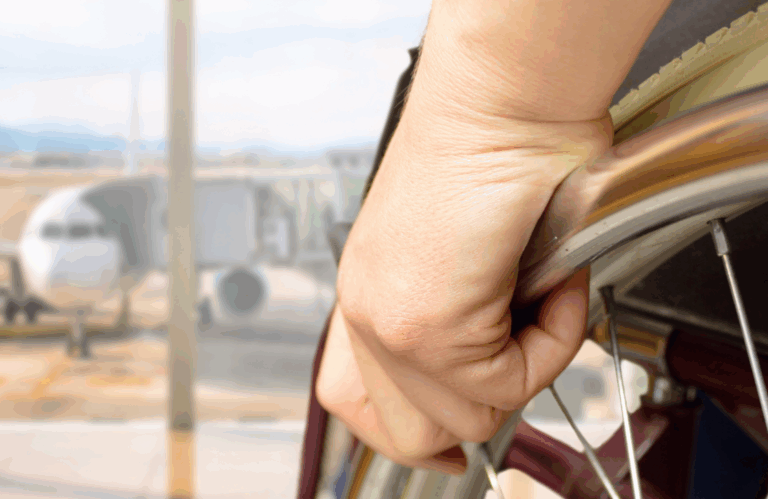
1. Traveling With a Wheelchair or Scooter 
- If checking a wheelchair/scooter, as baggage, and using the airport wheelchair service, use the main check-in desk (a human), not curbside check-in.
- If taking a personal chair to the gate, for on-board storage, curbside check-in may be used for baggage. Once at the gate, see the gate agent to have the chair tagged for the flight. Some airlines require an equipment check of a wheelchair/scooter to record any damage prior to the flight (i.e., scratches, dents, etc.).
- Upon arrival, it is not uncommon to wait a short time for the attendant to arrive with the wheelchair/scooter. If no one is on the jetway upon deplaning, ask the flight attendant to radio for assistance.
2. Going Through TSA 
All travelers are required to go through airport security and may be asked to remove shoes UNLESS an ankle brace or fracture boot is in use. If shoes stay on, expect to be swabbed. Some other things to keep in mind are:
- Decide whether it is easier to walk through the scanner or stay seated in the chair. If you choose to stay seated, a TSA agent is required to pat you down. This is a standard safety precaution. Given this, make sure to allow for extra time to get to the gate.
- Communicate with the pusher/assistant to let him/her know about the cooler with Strensiq™ (asfotase alfa), if appropriate. The assistant will typically call ahead to the gate to inform the agent of your arrival.
3. Gate Check In 
- Once at the gate, let the agent know you have arrived. Explain that you will need the chair and assistance down the jetway.
- Board the plane first before the general public. The assistant should carry the baggage to your seat.
- If using your own chair, remove anything detachable (i.e., brake extenders, seat cushions, and carry-on bags) as soon as you reach the plane door.
- Keep in mind that boarding protocols state that wheelchair passengers are first on the plane and last off the plane.
- If your flight is delayed and there is a tight connection, inform the flight attendant before landing so he/she can help expedite retrieving your items from cargo.
- In most cases, wheelchairs, scooters, or airport chairs are last to be brought down the jetway. If relying on an airport assistant, be sure to announce your name to the waiting pushers by the plane door.
4. Transfer Assistance Fees & Gratuities 
While airports provide wheelchair assistance free of charge, gratuities for the wheelchair attendant are permissible, but not required. Solicitation of tips is prohibited, and you should never be asked for a payment or tip. If you feel so inclined, $5 is typical for domestic flights. Longer distances, bathroom stops, or additional baggage should also be considered when determining a tip amount. Some online travelers report tipping as much as $20 for wheelchair assistance.