

Thanks for clicking to learn more!
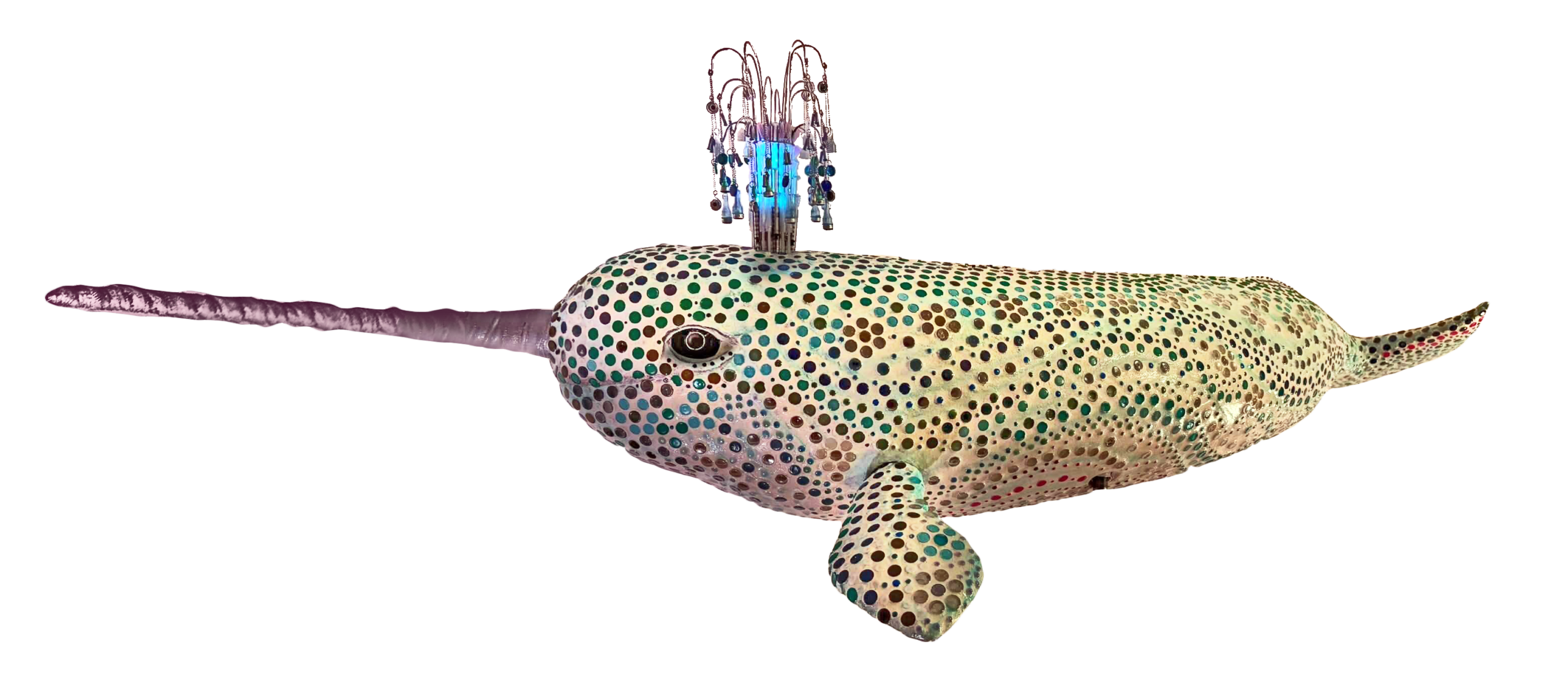
If you’re here, you likely saw Baby, the narwhal, a giant sculpture created by artist and HPP patient Suzanne Driscoll out of medical waste products. Baby measures over 6 feet long! She was created to help raise awareness of hypophosphatasia, a rare metabolic bone disease.
Are you a clinician?
What is a narwhal and what does it have to do with hypophosphatasia (HPP)?
The narwhal is a rare Arctic whale known for the extraordinary spiral tusk that extends from its head—earning it the nickname “the unicorn of the sea.” Elusive and seldom seen, narwhals can be difficult to spot unless you know where—and what—to look for. Hypophosphatasia (HPP) is a rare metabolic bone disease that can be elusive, too. Its signs may look like other, more common conditions, leaving the underlying diagnosis hidden in plain sight. But when you know the clues and connect the dots, HPP becomes easier to see.
The idea for the narwhal began with NJ-native artist Suzanne Driscoll and her twin sister, Amy, who both live with HPP. They loved the similarities between narwhals and their rare disease and how it could help bring attention to their rare condition.
A rare connection: narwhals + HPP
 Narwhal fact
Narwhal fact
Narwhals live in remote Arctic waters and are notoriously difficult to see and study. Their tusks even helped inspire legends about unicorns. (NOAA Ocean Exploration)
Narwhals are among the deepest-diving marine mammals, reaching depths of more than 5,900 feet—over a mile beneath the surface.
Narwhals spend significant amounts of time deep underwater and inhabit remote, ice-covered Arctic environments.
The narwhal’s famous spiral tusk is actually an elongated tooth—one of the characteristics that makes the species so distinctive.
Because narwhals live far from civilization, under ice and in darkness for much of the year, scientists have historically found them difficult to study. (NOAA Ocean Exploration)
They are found only in Arctic waters and have adapted to extraordinary depths and pressures.
Not every narwhal looks exactly the same. Their appearance changes over their lifetime, and the famous tusk, which is actually an elongated tooth, is most commonly seen in males.
 HPP connection
HPP connection
It’s a rare disease that many clinicians may encounter infrequently—and its wide spectrum of symptoms can make it difficult to recognize. (PubMed Central (PMC))
Persistently low alkaline phosphatase (ALP), adjusted for age and sex, is a hallmark biochemical finding of HPP and an important clue in the diagnostic journey.
Low ALP can appear repeatedly on routine bloodwork yet go unrecognized; one hospital study found recognition of persistent low ALP was very low. (PubMed)
Premature tooth loss, particularly primary teeth lost with the root intact, is a characteristic manifestation of HPP. Dental problems can occur in adults as well. (NCBI)
HPP isn’t diagnosed from a low ALP value alone. Persistently low ALP should prompt consideration of symptoms, medical history and other diagnostic evidence while excluding other causes of low ALP.
HPP affects mineralization of bone and/or teeth, while symptoms may include fractures, pain, muscle weakness and dental problems.
HPP has a broad clinical spectrum; manifestations and severity can vary substantially—even among members of the same family.
What is the narwhal Made of?
Nearly every part of Baby has a story. She is sculpted out of medical waste.
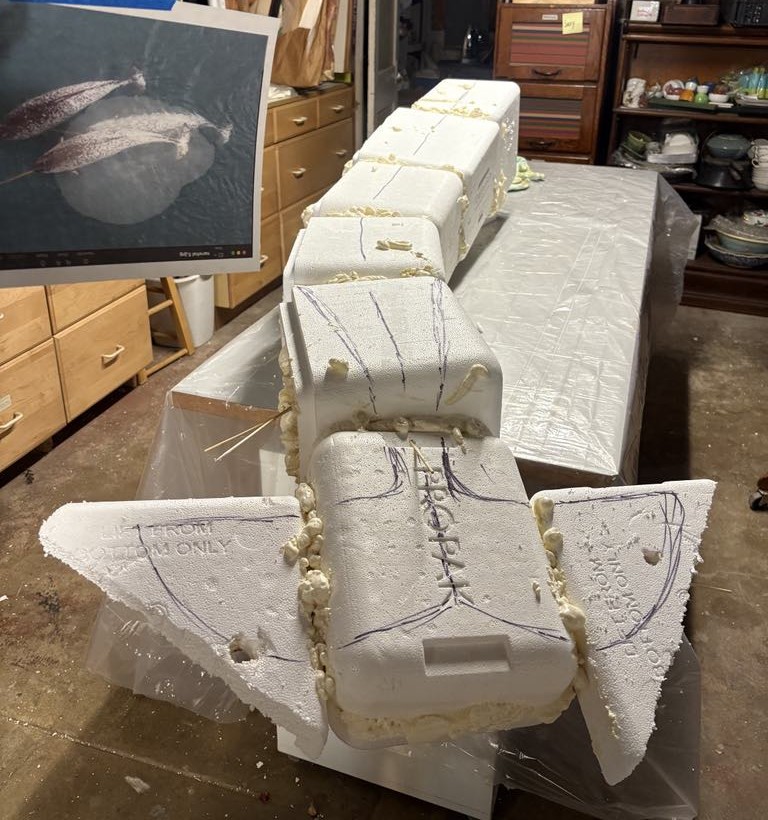
 Body and tusk
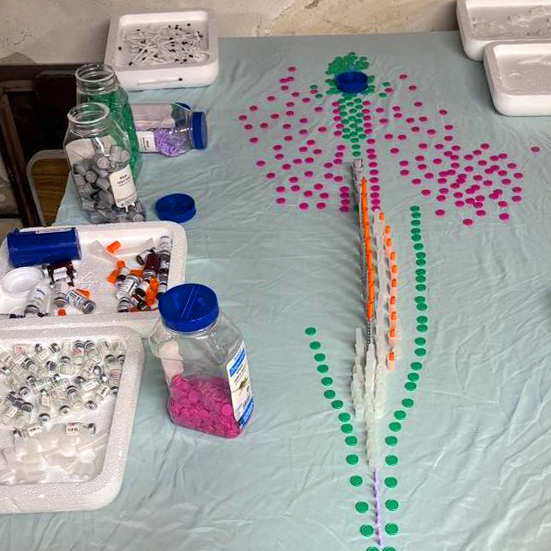
The body is carved from styrofoam coolers used to ship temperature controlled medication, the tusk was created from an ace bandage and disease educational printed materials, the colorful dots are all caps from vials, representing different doses of medication. Much of what makes up the sculpture is material that otherwise “would go into the garbage or recycling.” Instead, it became a beautiful piece of art to educate about hypophosphatasia and to represent the HPP community.
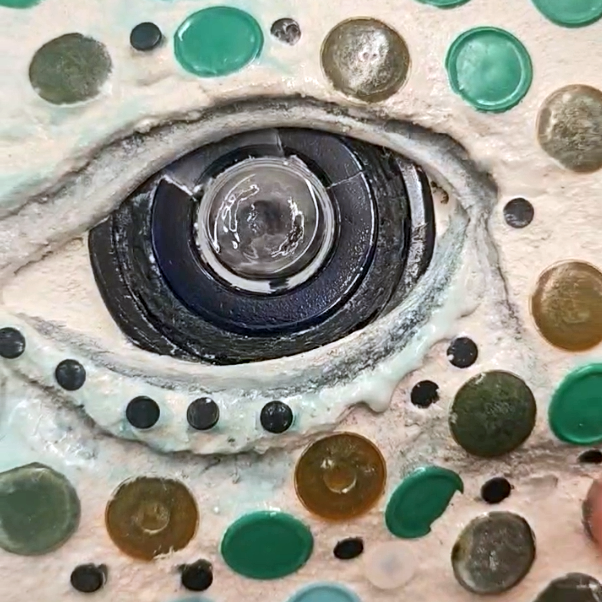
 The eye
The eye of the narwhal is especially significant. The cross section of a bottle of alcohol, which Suzanne says is symbolic of her life before having an HPP diagnosis. Suzanne says the eye itself is made from part of an alcohol bottle, which she jokingly describes as a little “self-medicating.” One of the most personal details happened by accident. Suzanne explains that while she was working on the narwhal, she dropped the piece used for its eye and it broke in three places. She was devastated. But the accident happened on the same day that Amy was undergoing her third eye surgery. That coincidence changed Suzanne’s mind about repairing it. She decided to leave the broken eye as it was, allowing the imperfection to become part of the story of the sculpture and part of Amy’s story as well.
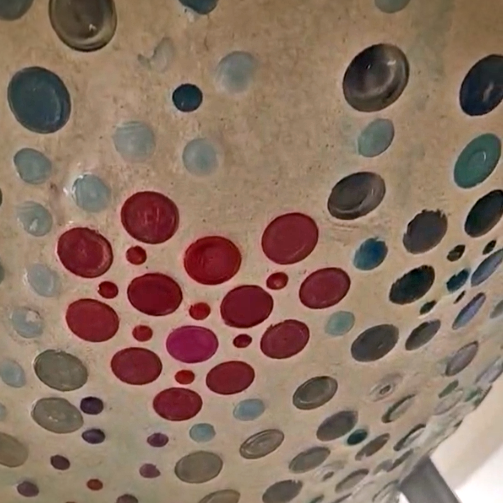
 The heart
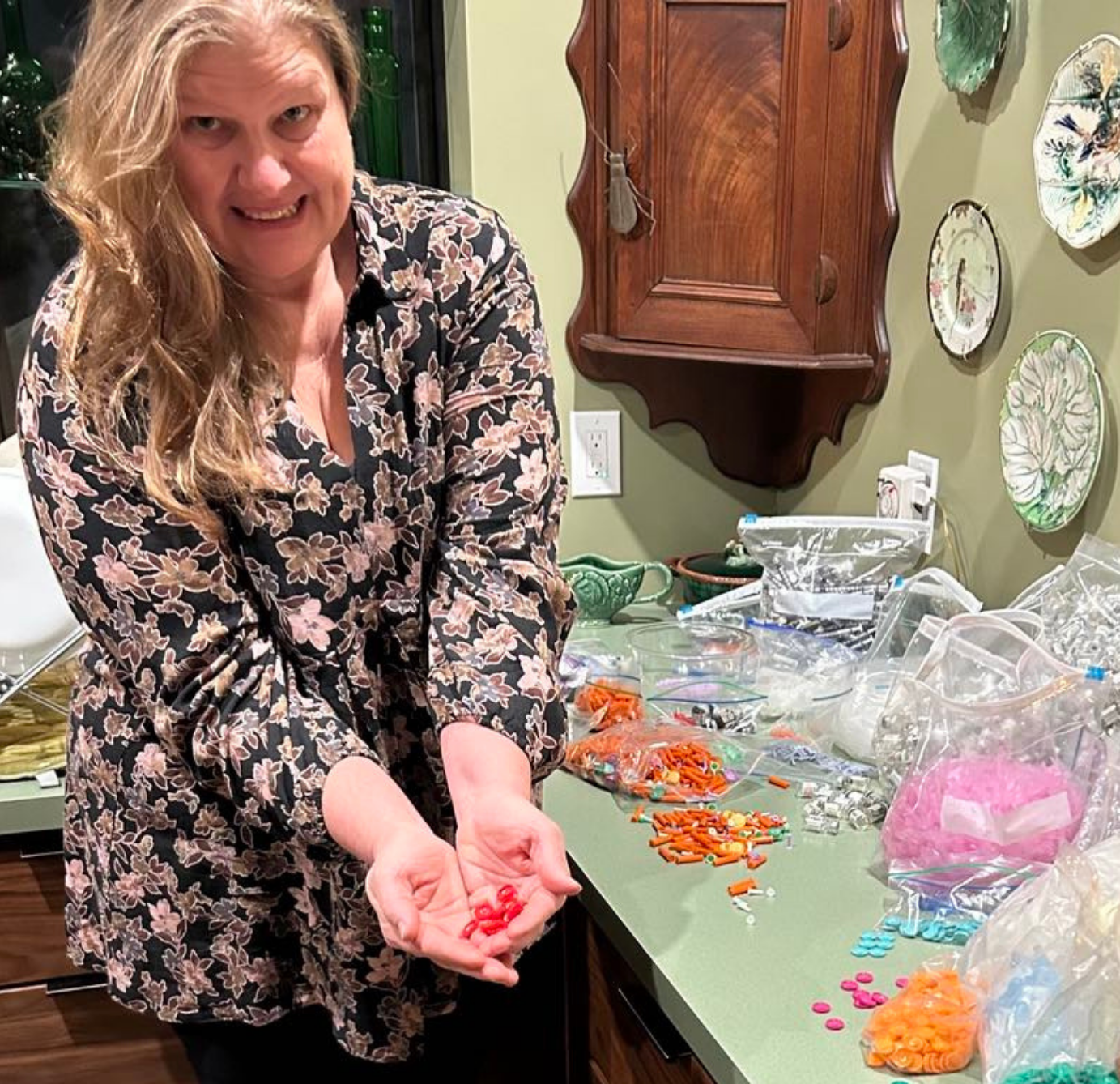
Perhaps the most meaningful detail is the narwhal’s heart. Created from red caps from a potential new treatment that is currently in clinical trials, the heart represents future innovation around treatment of HPP, and the hope that comes along with it.
 The waterspout
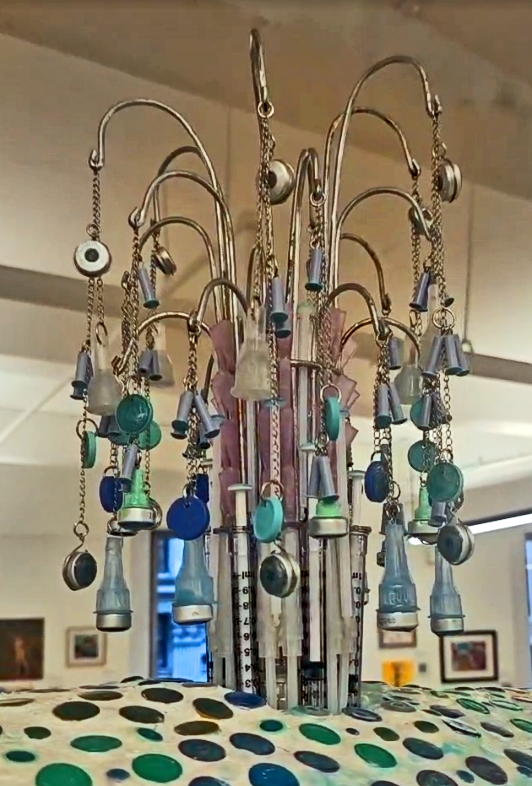
The narwhal’s water and spray introduce a lighter, more expressive side of Suzanne’s personality. She describes some of the embellishment almost as jewelry—“her bling bling”—but says that, more broadly, she wanted the whole sculpture to have the feeling of being in water. She wanted movement and flow rather than something static. That choice also carried personal meaning: “Water is my happy place,” Suzanne says; A feeling shared by many in the HPP community, for whom being in water can simply feel more comfortable.
 Other materials
Suzanne also tucked smaller, more personal objects throughout the narwhal. She points out the lid from a vitamin bottle used for calcium, explaining that the bottle itself is buried inside the body so the lid can still screw into it. Other materials are incorporated less visibly beneath the surface. It gives the sculpture a layered quality: some pieces immediately identify themselves as medical objects, while others are hidden within the structure, much like the accumulated routines and supplies that become part of everyday life with a chronic rare disease.
 About the artist
As a child, Suzanne Driscoll didn’t know what brain fog, muscle weakness, depression, or anxiety were—or that “growing pains” weren’t something all kids had to endure. She saw that it was much harder for her to do things other kids did easily and was deeply ashamed that they might see her struggle as stupidity or laziness. Art was the one area where she felt competent.
Suzanne studied ceramic sculpture through graduate school, thinking of her work as “Dream Maps.” Seeing a finished piece felt like waking from a dream having had a glimpse into what her life’s experiences had meant.
The work helped her get to know herself a little—but it would be over 30 years before she had the energy to make art again. Making wedding cakes for family morphed into a 28-year career in catering. She catered to presidents and princes and was proud to be able to support her family well. But overcompensating for brain fog came with long hours and mind-numbing stress. Pain and fatigue finally overtook her ability to push through.
At 53, her twin sister discovered they both had HPP. With the help of Soft Bones, they were officially diagnosed and began treatment a year later. Improvement didn’t come quickly or easily but by age 58 Suzanne found herself able to make art again. The narwhal is the first piece she has shown since 1993—an awakening a long time in the making. She is filled with gratitude for her village of family and friends, and to the Soft Bones community for holding her steady through self-doubt with their persistent engagement and generosity of spirit.